Particle Physics Days 2025 in Hyytiälä
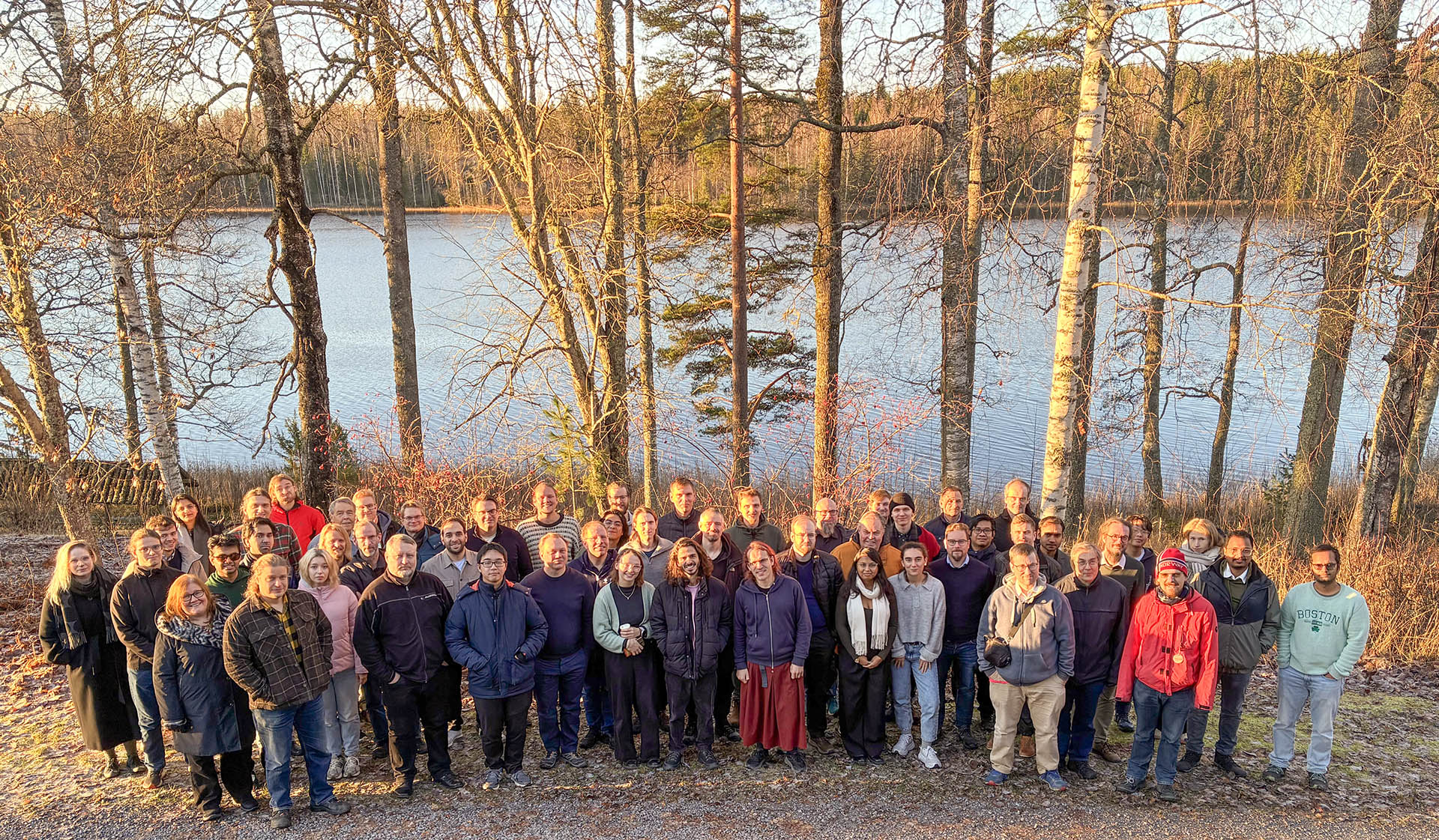
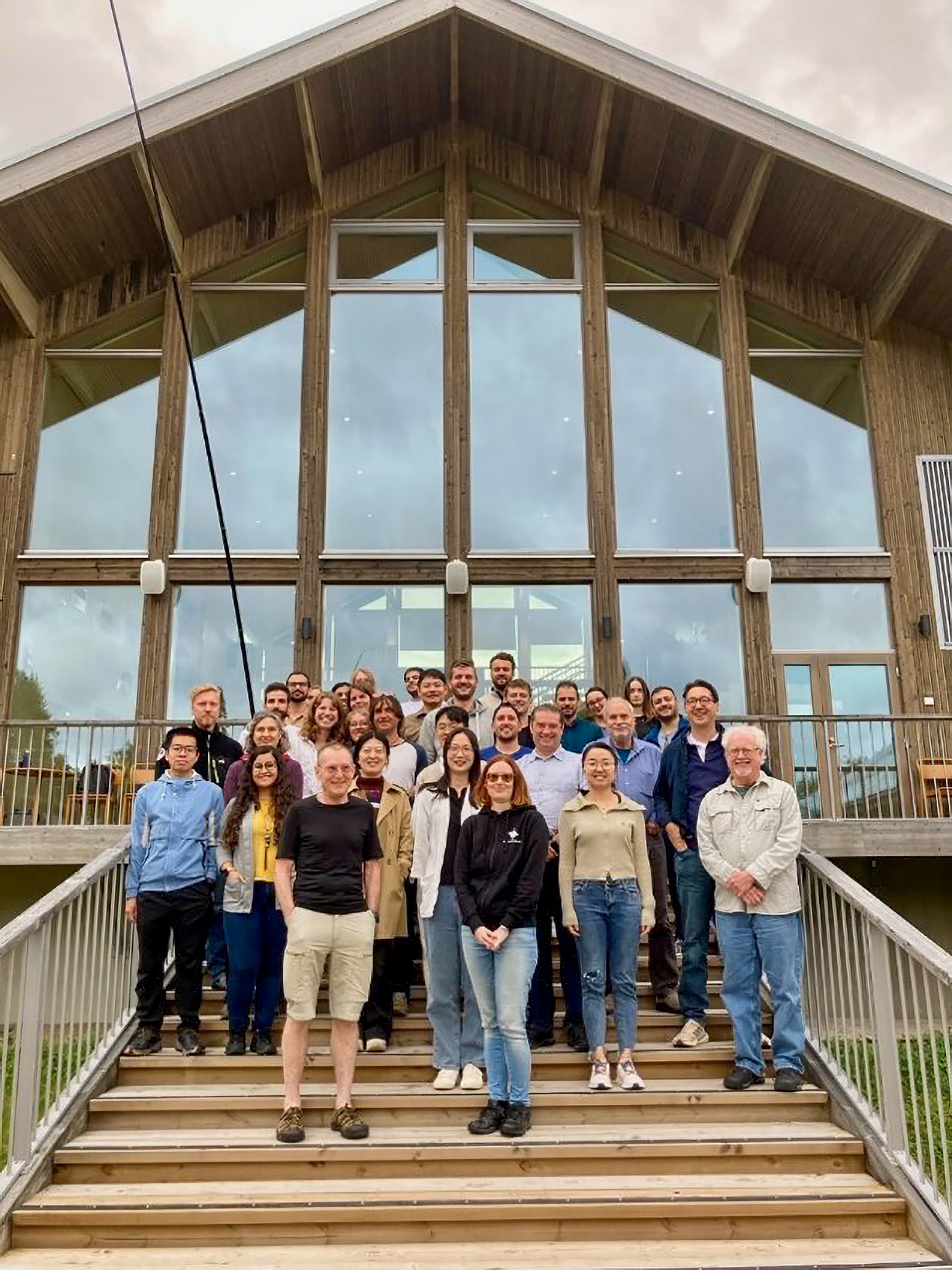
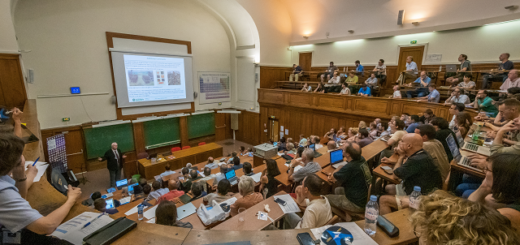
The annual Particle Physics Days, organised by the Particle Physics Division of the Finnish Physical Society, were held from 13-14 November at the University of Helsinki’s Hyytiälä Forest Station. It was the second year in a row that the community left cities behind for a research station in the countryside, and close to seventy physicists from the Finnish community made the trip for two days of talks, strategy discussions, and lakeside networking (the 2024 edition was at Lammi Biological Station).
In a new twist to the setup, the different subactivities in the field were invited to hold group-specific satellite events before the particle physics days. The CMS Experiment and Forward Physics projects seized the opportunity for a brief “lunch-to-lunch” retreat, a small sibling of the kickoff retreat of European and nationally funded major projects last year in Kilpisjärvi. Looking ahead, it is easy to imagine other HIP projects using the same pattern: arrive a bit earlier, run a dedicated half-day or day on a specific topic, then stay on for Particle Physics Days.
Hyytiälä is not a typical conference venue. It is best known for long-term measurements of forest-atmosphere interactions and the SMEAR setup, but in recent years it has also become a Living Lab for studying the built environment, climate and wellbeing. The new wooden main building and residence halls, completed in 2023 and shortlisted for the Finlandia Prize for Architecture, can host up to 90 guests right by the lake and forest. The cherry on the cake was the two lakeside saunas, a kota between them, and the availability of other flexible indoor areas during the day and evening.
The scientific programme on Thursday opened with strategy and long-term perspectives. The first session revisited the European Strategy for Particle Physics (ESPP) update process. The Finnish ESPP input and the Nordic coordination work were summarised compactly: how the national discussion at the previous particle physics days in Lammi, subsequent surveys and consultations fed into the Finnish document, and how that in turn linked up with wider Nordic priorities in collider physics, detector R&D and computing. Early-career researchers also had a visible role. The ECFA ECR panel’s work and its white paper to ESPP highlight important themes: supervision practices, the scarcity of permanent positions, and the importance of timely strategic decisions for keeping young people in the field. On the big strategic question, the Finnish position identifies FCC-ee as the preferred post-LHC flagship at CERN (presented in detail in a dedicated talk on Friday morning). International support for FCC-ee is gaining momentum, e.g. with a recent commitment from China to support FCC-ee in favour of its own CEPC project, should Europe decide to go ahead within the next few years (CERN Courier, CEPC matures, but approval is on hold).
Beyond the strategy, the programme covered a wide slice of current Finnish particle physics. And, as usual, there were reasons to celebrate:
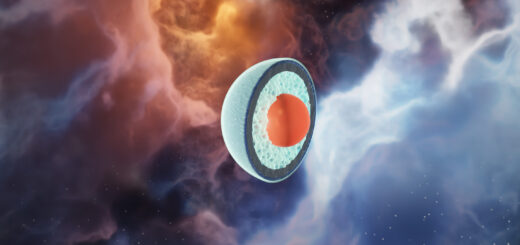
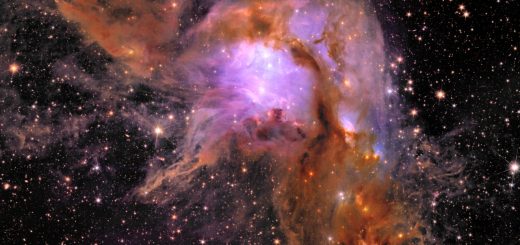
The new Centre of Excellence (CoE) in Neutron-Star Physics, having received funding just two weeks before the event, brings together the Universities of Helsinki, Jyväskylä, and Turku to study matter in extreme conditions. Neutron stars are the densest observable objects in the universe, and the new CoE investigates them with a combination of astrophysics, particle physics, nuclear physics and relativity.
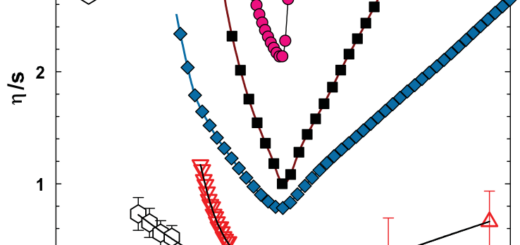
On the theory side, there were overviews on QCD and dense matter and more dedicated contributions – connecting neutron-star interiors, heavy-ion collisions and out-of-equilibrium plasmas – as well as work on cosmological particle production, dark relics and inflation.
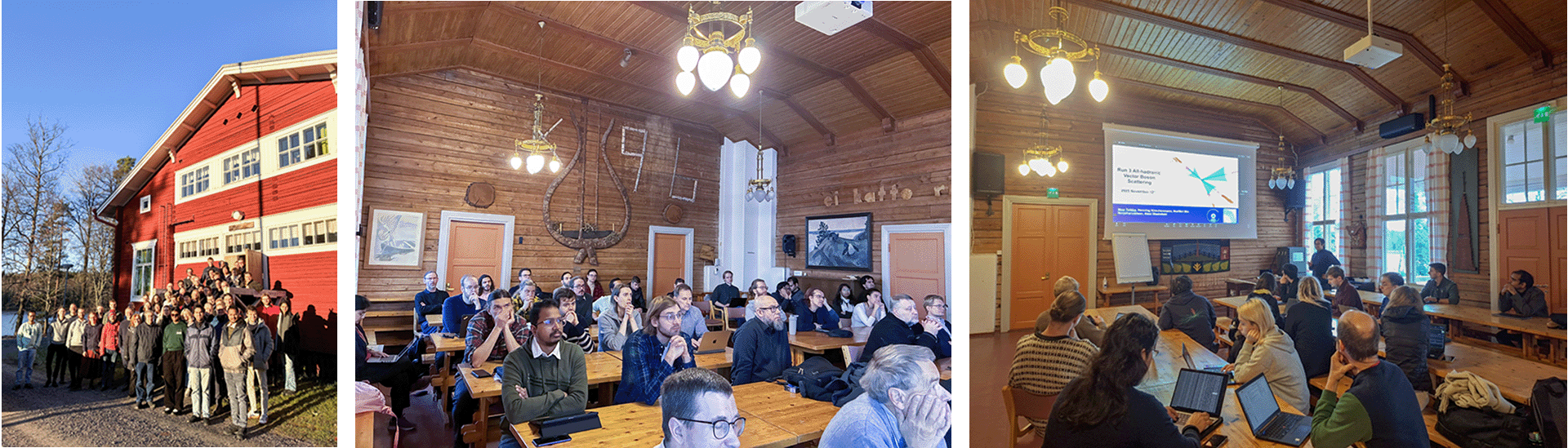
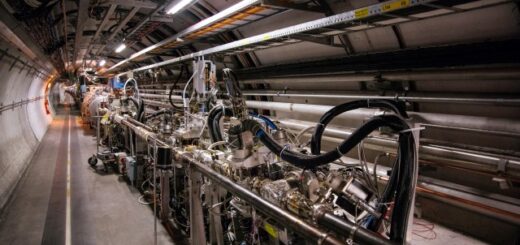
On the experimental side, the LHC experiments featured prominently: Run-3 results and prospects from CMS and ALICE, upgrade plans for the HL-LHC era, and the rich physics programme opened up by forward detectors and proton tagging.
Applications were also visible. One talk highlighted work on non-invasive 3D imaging of spent nuclear fuel using cosmic-ray muons and reactor antineutrinos – a nuclear-safeguards topic where techniques developed for particle physics find a very concrete societal use. Another contribution came from the Hyytiälä Forest Station’s director Juha Aalto, who gave an overview of the station’s forest and atmosphere measurements and the new Living Lab activities.
It was great to see that the Finnish groups are active across the spectrum: from formal theory and cosmology, through heavy-ion and collider phenomenology, to large-scale detector projects and applied nuclear and environmental physics.
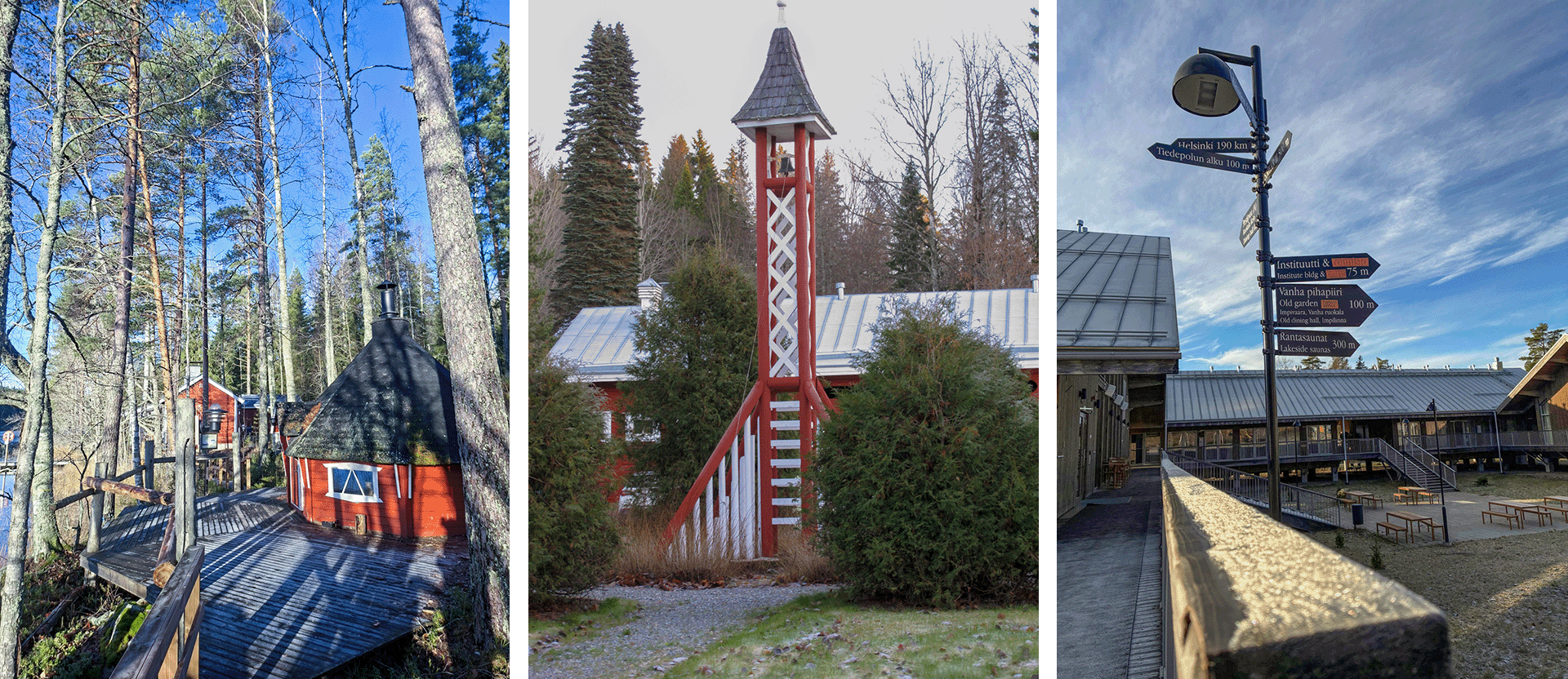
As always, a lot of new ideas sprang to life outside the lecture hall, in new encounters during coffee breaks and meals and also after dinner: The group scattered between the lakeside saunas, the kota, common rooms and walking paths. People mixed across universities, projects and seniority levels in a way that is difficult to recreate in a one-day meeting in the city. When the community gives itself time and a good setting, it can do more than just exchange slides: it can contribute meaningfully to European strategy processes, think together about the future collider landscape, and still leave space for early-career voices and side projects.
Henning Kirschenmann
Helsinki Institute of Physics & LUT University