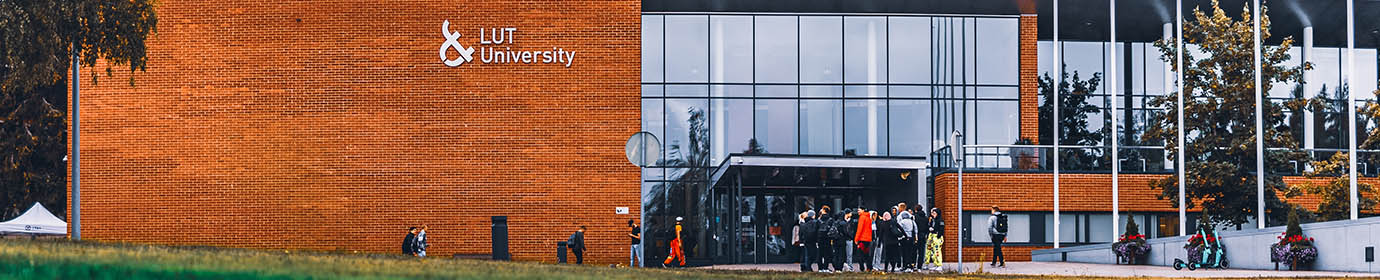
Opening Address for the FCC Week 2026
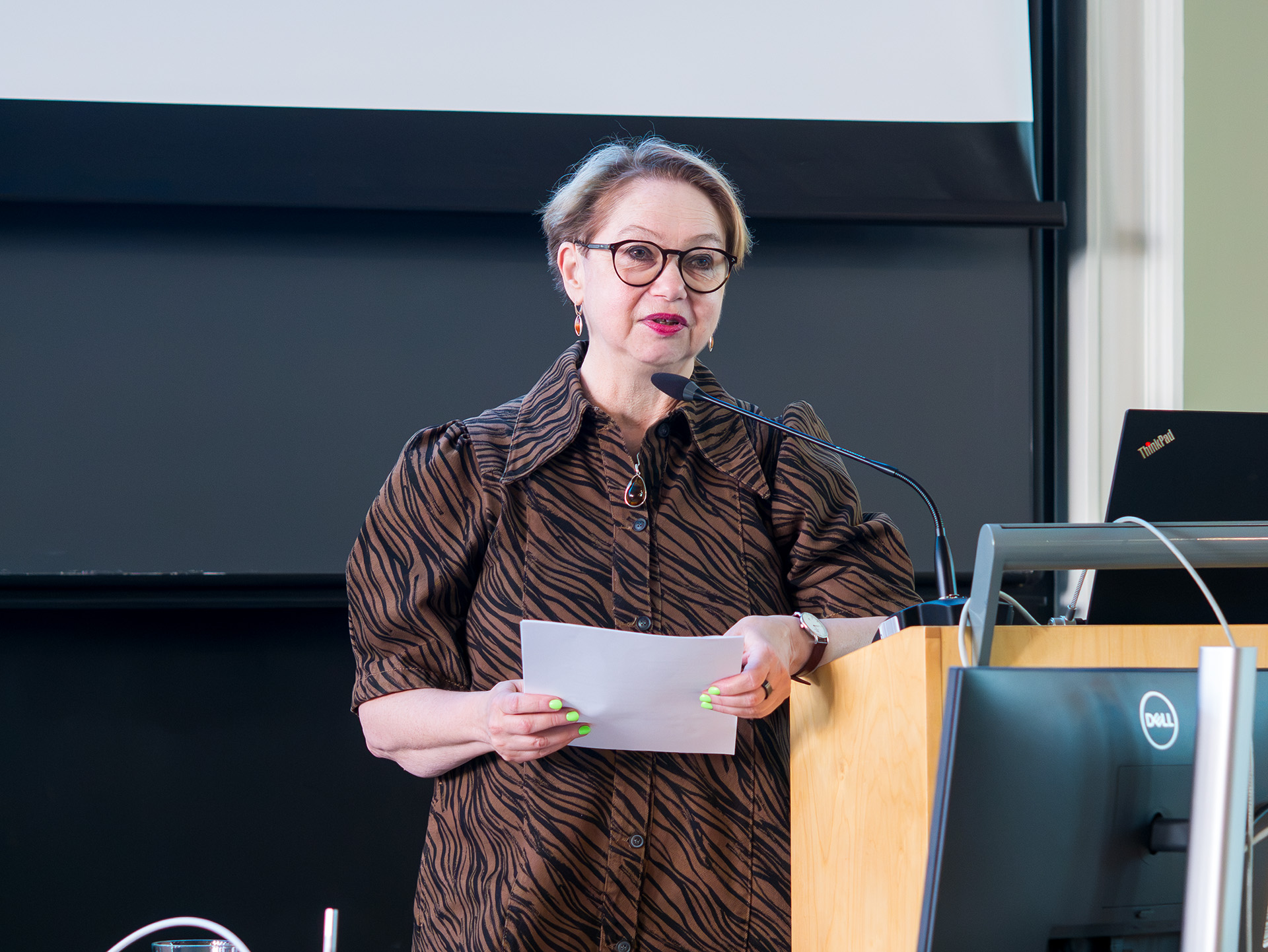
This blog contains the opening speech in the FCC week in Helsinki in June 2026 by prof. Paula Eerola, President of the Research Council of Finland
Distinguished Director-General,
Excellencies,
Ladies and gentlemen,
It is a great honor to address you today at the FCC Week. I am Paula Eerola, the President of the Research Council of Finland. I have the privilege of filling in on behalf of Finland’s Minister of Science and Culture, Mari-Leena Talvitie.
Let me begin by thanking CERN and the organizers for bringing us together. It is great to welcome so many of my previous colleagues to my hometown, and to see many familiar faces here in my Alma Mater.
Like many of you, curiosity to the fundamental questions in our Universe brought me to CERN. My first contact with CERN was over 40 years ago as a summer student, searching for ways to trigger on the then-hypothetical top quark with the UA2 experiment. Over the years I have served the particle physics community in many ways – as a student, as a researcher, as a Council member, and now as research funder.
CERN is and has been a role model for international cooperation, with a shared belief that advancing knowledge is a long-term, collective responsibility. The brightest minds from across the globe come together, not as representatives of their nations, but as ambassadors of human curiosity and discovery.
At CERN, science transcends borders, and collaboration becomes a powerful force that unites us all. In a world often divided, CERN stands as an example of what humanity can achieve when we work together. Scientists from countries with vastly different histories and perspectives work side by side, driven by a shared mission to understand the Universe.
However, CERN is not isolated from geopolitical challenges. The global situation has changed dramatically in recent years, and therefore also CERN has had to reconsider international partnerships. Research security and potential harmful use of knowledge are also issues that we must take into account.
The scale and ambition of CERN are truly extraordinary. Its vast infrastructure, unmatched in scope and capability, enables discoveries that reshape our understanding of reality itself. After 40 years in the branch, it is still a miracle for me to see how we manage to make the huge and complicated experiments to work, thanks to the responsible openness, trust, and collective pursuit of knowledge. I consider myself profoundly fortunate to have been part of this remarkable community.
At CERN, no single nation owns the discoveries; they belong to all of humanity. This shared ownership fosters scientific breakthroughs, and also mutual respect and lasting connections between people and cultures. It is a place where ideas flow freely, and where the future is built together.
Our world faces challenges that no country can solve alone. CERN shows us a way forward: by pooling our knowledge, our resources, and our aspirations, we can achieve the extraordinary. We need more institutions like CERN — places that bring us together and remind us of our shared destiny.
Curiosity and the vision 2040
In Finland, we are currently finalizing a new national vision for higher education and research extending to 2040. At its core is a simple but powerful vision: A society built on knowledge, education, and scientific freedom is a society capable of renewal. This vision recognizes that curiosity-driven research is not a luxury. It is fundamental to progress in science but also in society in general.
The story of particle physics illustrates this well. From theoretical ideas to the discovery of the Higgs boson decades later, curiosity has led to breakthroughs that reshape our understanding of reality — and, ultimately, society itself.
The FCC in a transforming world
The Future Circular Collider must be seen in this broader context. It is a scientific endeavor, which is part of a long-term commitment to exploration, knowledge, and technological capability.
The FCC is expected to address some of the deepest open questions of our time. At the same time, it would drive advances in critical technologies — from superconductivity to computing and materials science.
In Finland’s vision, such developments are essential. We see ambitious research and creative expertise as key drivers of societal renewal and sustainable growth. Large-scale infrastructures like CERN are therefore more than centres of discovery. They are platforms, where science, technology, and society evolve together.
Education, talent, and the future of knowledge societies
A central goal in Finland’s vision is to strengthen the knowledge base of our society. We aim to expand access to higher education and ensure that more young people — and lifelong learners — can develop the skills needed in a rapidly changing world. This is about numbers, and about quality, creativity, and the ability to think critically. The rapid entry of artificial intelligence into our everyday lives does not require less knowledge from us, it requires more and better analytical skills.
Scientific breakthroughs require people who are able to ask questions, challenge assumptions, and collaborate across disciplines. CERN plays a unique role here. It is the training ground for the next generation of scientists, engineers, and innovators. CERN is a place where talent is educated and transformed.
From knowledge to renewal and impact
Finland’s vision also emphasizes that knowledge must contribute to renewal. We need a system where:
- fundamental research is strong
- innovation pathways are effective
- and new ideas can be translated into societal benefit
This is not a linear process. It is an ecosystem. Fundamental research — such as particle physics — is the starting point. Over time, it creates technologies, industries, and solutions that we could not have predicted. The history of CERN — from the World Wide Web to medical technologies — demonstrates precisely this dynamic.
International cooperation and shared responsibility
Another key principle in Finland’s vision is international openness. Science is global. Talent is global. Challenges are global. At the same time, the world around us is becoming more complex. Cooperation must be both open and responsible.
CERN remains one of the strongest examples of how international collaboration can work — bringing together countries and cultures around shared questions. Projects like the FCC are expected to offer an opportunity to continue this tradition. Large-scale cooperation should remain grounded in trust, shared rules, and long-term commitment.
Quality, autonomy, and trust
Finland’s vision places strong emphasis on scientific freedom and quality. These are not abstract values; they are the foundation of impactful research.
In Finland, trust in science is high. It is built on openness, independence, and responsibility. Maintaining this trust is essential, especially as science becomes more complex and more closely linked to society and technology. Large research infrastructures must therefore operate at the highest level of excellence, and also with transparency and integrity.
Transformation of higher education and research
Our vision also recognizes that the system itself must evolve. Technological change, including artificial intelligence, is transforming how research is conducted and how knowledge is created and shared.
At the same time:
- competition for talent is increasing,
- demographic changes are reshaping societies,
- and global challenges require interdisciplinary solutions.
To respond, research performing organizatios should:
- collaborate more closely,
- specialise strategically,
- and work in stronger partnership with industry and society at large.
This transformation is essential for maintaining both excellence and relevance.
Commitment and long-term investment
Finally, none of this is possible without long-term commitment. Finland’s vision highlights the need for predictable, sustainable investment in research and education. Because the benefits of science do not appear overnight. They build over time through people, knowledge, and innovation ecosystems.
Large infrastructures such as the FCC require exactly this kind of long-term thinking. They are investments in science, capability, resilience, and the future of society.
Closing
Ladies and gentlemen,
The Future Circular Collider represents more than the next step in particle physics. It represents a broader choice:
- to remain committed to curiosity,
- to invest in knowledge and people,
- and to work together across borders in pursuit of understanding.
Finland’s emerging vision for higher education and research is built on these same principles:
- education and knowledge as the foundation of society,
- freedom of science and critical thinking,
- international collaboration,
- and the courage to renew and innovate.
Finland stands ready to consider participation to this shared effort. Let us use this week to strengthen our cooperation and to move forward with ambition, responsibility, and a long-term vision.
Thank you very much for your attention.
Paula Eerola, President, Research Council of Finland